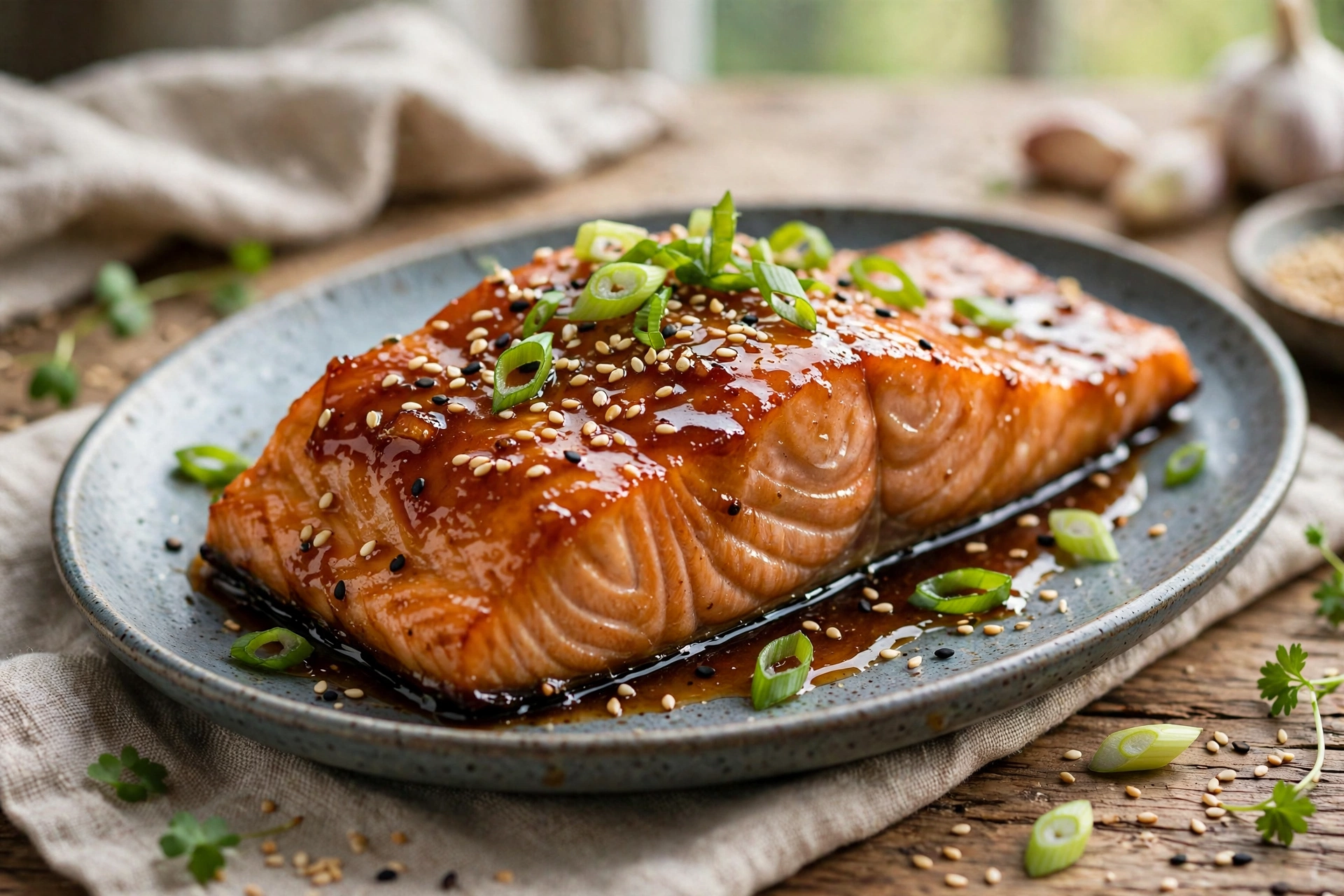
Some recipes feel like a secret you wish you had learned years ago. Honey glazed salmon is one of those for me. It takes about twenty minutes, uses a handful of pantry ingredients, and produces a fillet with a sticky, caramelized glaze that tastes like it came from a restaurant kitchen. The outside turns glossy and golden, the inside stays tender and flaky, and the whole thing is on the table before the rice has even finished steaming.
I started making this on nights when I wanted something that felt healthy without feeling like a punishment. Salmon has a way of making dinner feel grown-up and a little bit fancy, even when the cooking itself is dead simple. The honey in the glaze caramelizes in the pan, the soy sauce adds a savory depth, and the garlic and ginger keep it from tasting one-note. A squeeze of lemon at the end brightens everything, and suddenly a plain piece of fish tastes like something worth sitting down for.
What keeps me coming back to it is the balance. It is sweet but not sugary, savory but not salty, rich but not heavy. It works with rice, with roasted vegetables, with a simple salad — basically with whatever you already have. And because it cooks so fast, it is the dinner I reach for when I am short on time but still want to eat something genuinely good.
Why You’ll Love This Recipe
First, it is fast. From the moment the pan heats up to the moment you plate the salmon, you are looking at about twenty minutes, and most of that is just letting the glaze do its work. There is no marinating, no special equipment, no complicated steps. If you can whisk a sauce and flip a fillet, you can make this tonight.
Second, the glaze is the star. Honey, soy sauce, garlic, and ginger cook down into a sticky coating that clings to the fish and caramelizes at the edges. It is sweet, savory, and just a little bit tangy, and it turns an ordinary salmon fillet into something people ask about. Spooning the extra glaze from the pan over the top at serving time is not optional in my house — it is the best part.
Third, it is a genuinely healthy dinner that does not taste like a compromise. Salmon is rich in omega-3s and protein, and the glaze uses a modest amount of honey rather than a heavy sauce. Paired with rice and vegetables, it is a balanced, satisfying meal that leaves you feeling good rather than weighed down. Eating well should taste like this more often.
And finally, it is impressively versatile. Serve it over jasmine rice with steamed broccoli for a classic weeknight plate. Flake the leftovers into a salad or a grain bowl for lunch the next day. Double the glaze and toss it with roasted vegetables. Once you have the sauce down, you will find yourself using it on chicken, shrimp, and tofu too.
Ingredients
- 4 salmon fillets (about 6 ounces each), skin on or off
- Salt and freshly ground black pepper, to taste
- 1 tablespoon olive oil or vegetable oil
- 3 tablespoons honey
- 3 tablespoons low-sodium soy sauce
- 2 garlic cloves, minced
- 1 teaspoon fresh ginger, grated
- 1 tablespoon rice vinegar or fresh lemon juice
- 1 teaspoon sesame oil (optional)
- 2 green onions, thinly sliced, for serving
- 1 teaspoon sesame seeds, for serving
- Lemon wedges, for serving
Method
- Take the salmon out of the refrigerator 15 minutes before cooking so it comes closer to room temperature. This helps it cook more evenly. Pat the fillets completely dry with paper towels and season both sides with salt and pepper. Dry fish sears better and the glaze sticks to it more evenly.
- Whisk together the glaze in a small bowl: the honey, soy sauce, minced garlic, grated ginger, rice vinegar or lemon juice, and sesame oil if you are using it. Set the bowl next to the stove. The cooking goes quickly once the fish is in the pan, so you want the glaze within arm’s reach.
- Heat the oil in a large, oven-safe skillet over medium-high heat until it shimmers. Place the salmon fillets in the pan, skin side down if they have skin, leaving space between them. Do not move them for 3 to 4 minutes. Let the skin crisp and the flesh turn opaque about halfway up the side of the fillet. Resisting the urge to poke at them is what builds that golden crust.
- Flip the fillets carefully with a thin spatula. Cook for 1 to 2 minutes on the second side, until the flesh is just barely translucent in the very center. The salmon will keep cooking off the heat, so pulling it slightly early is the right call — overcooked salmon is dry, and there is no sauce in the world that fully fixes it.
- Lower the heat to medium and pour the glaze into the pan around the fillets, not directly on top of them at first. It will bubble and start to thicken almost immediately. Spoon the glaze over the fillets continuously for 1 to 2 minutes, letting it coat each piece and caramelize at the edges. Watch it closely — honey goes from beautifully caramelized to burnt in a matter of seconds.
- Remove the pan from the heat the moment the glaze turns thick and glossy and the salmon flakes easily with a fork. If you like your salmon cooked through rather than slightly pink in the center, give it one more minute in the pan, but no more. The residual heat will carry it the rest of the way.
- Serve immediately, spooning any extra glaze from the pan over each fillet. Finish with sliced green onions, a sprinkle of sesame seeds, and a lemon wedge on the side. Jasmine rice and steamed broccoli are my favorite partners here, since they soak up the extra glaze beautifully.
Tips and Variations
Watch the glaze, not the clock. Honey caramelizes fast, and the difference between a glossy, sticky glaze and a burnt, bitter one is about thirty seconds. Keep the heat at medium once the glaze goes in, keep spooning it over the fish, and pull the pan off the heat the moment it thickens. If it does start to darken too much, a splash of water will loosen it and buy you a few seconds.
Do not overcook the salmon. This is the advice that matters most for any salmon recipe. The fish should flake easily but still look slightly translucent in the very center when you take it off the heat — that is medium, and it is where salmon is at its best. If you prefer it fully cooked through, that is completely fine too, but add time in small increments and check often. A thermometer should read 125°F for medium and 145°F for fully cooked.
Skin on or off both work. Skin-on fillets are more forgiving because the skin protects the flesh from the heat and crisps into something delicious. If your fillets are skinless, be a little gentler when flipping and reduce the first-side cooking time by about a minute. Either way, patting the fish dry before it hits the pan is what gives you a good sear.
Change up the glaze to keep things interesting. Add a teaspoon of sriracha or a pinch of red pepper flakes for heat. Swap the honey for maple syrup for a deeper, woodsier sweetness. Stir in a tablespoon of Dijon mustard for tang. The base of soy, garlic, and ginger is a template, and once you trust it, you will start riffing on it with whatever is in your pantry.
Frequently Asked Questions
Can I bake this instead of pan-searing?
Yes, and it works beautifully. Place the seasoned fillets on a lined sheet pan, brush them generously with the glaze, and bake at 400°F for 10 to 12 minutes, until the fish flakes easily. Brush with more glaze halfway through if you like a thicker coating. You will miss the crispy sear from the pan, but the flavor is just as good, and it is even more hands-off.
How do I know when the salmon is done?
Press the thickest part gently with a fork and twist — the flesh should separate into flakes easily. For medium, the center will still look slightly translucent and glossy. A thermometer is the most reliable check: 125°F for medium, 145°F for fully cooked. Remember that the fish keeps cooking for a minute or two off the heat, so pull it a touch early.
Can I use frozen salmon?
Yes, but thaw it fully first. Thaw overnight in the refrigerator, or in a sealed bag under cold running water for about 30 minutes. Pat it very dry before cooking, since excess moisture prevents a good sear and thins the glaze. Once thawed and dried, frozen salmon cooks exactly like fresh.
What should I serve with honey glazed salmon?
Jasmine rice is the classic partner because it soaks up the extra glaze. Steamed broccoli, green beans, or roasted asparagus all work beautifully. For something lighter, a cucumber salad or a simple slaw with rice vinegar dressing cuts through the sweetness of the glaze. Leftovers flake wonderfully into a grain bowl or over a salad the next day.
That is honey glazed salmon: twenty minutes, one pan, and a glaze that makes a simple fillet taste like a treat. I hope this becomes one of those recipes you keep in your back pocket for the nights when you want dinner to feel a little bit special without any extra effort. Spoon over the extra glaze, pass the lemon wedges, and enjoy the rare pleasure of a healthy dinner that everyone actually asks for again.