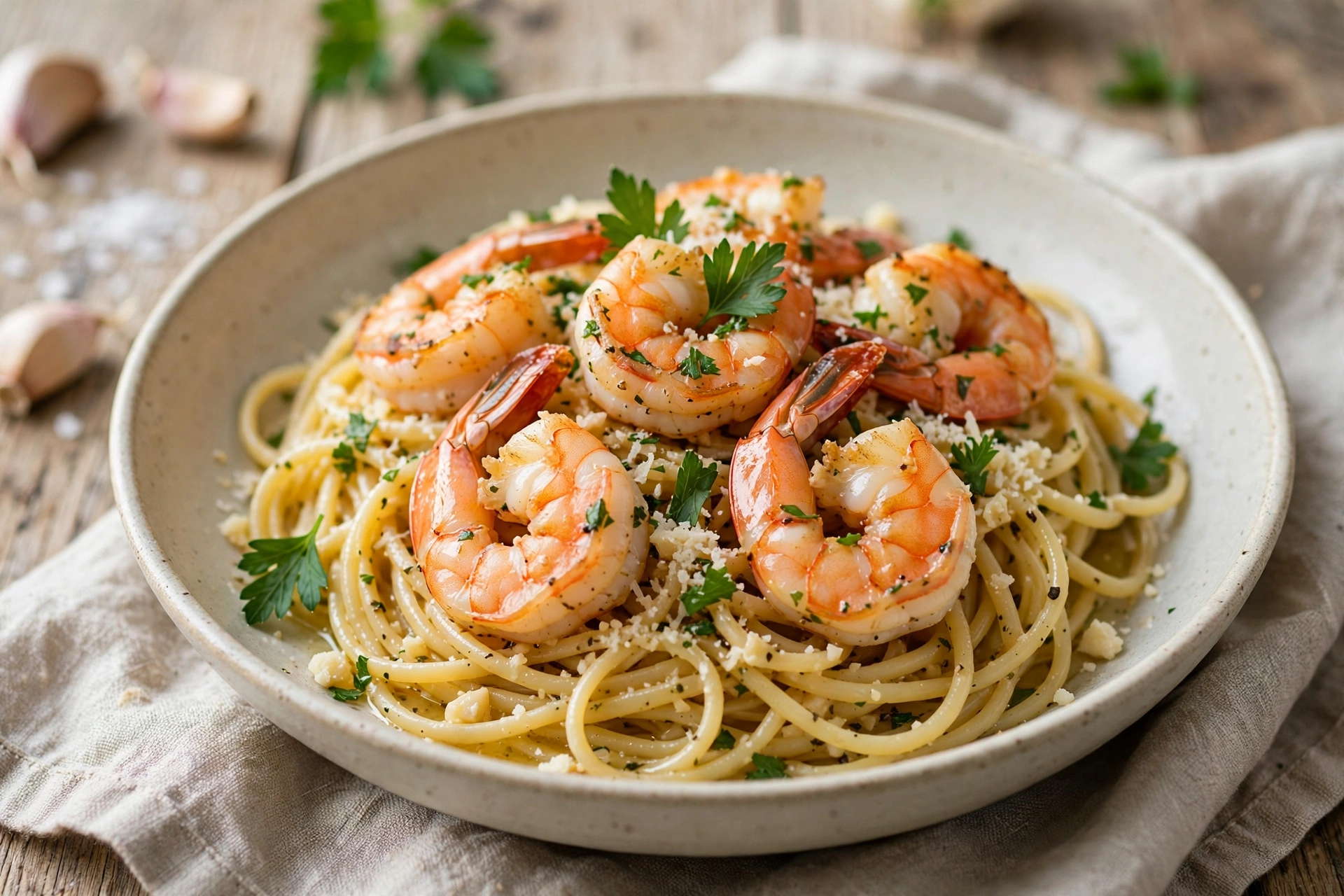
Some dinners earn a permanent spot in your weeknight rotation because they taste like you tried much harder than you did. This garlic butter shrimp pasta is exactly that kind of recipe. It comes together in about twenty minutes, uses ingredients you probably already have, and tastes like something you would happily pay for at a restaurant. The shrimp turn pink and tender in garlicky butter, the pasta soaks up a light lemony sauce, and a shower of Parmesan and fresh parsley ties the whole thing together.
I first started making this on nights when I got home late and hungry, with no real plan and even less patience. It has rescued more evenings than I can count. There is something deeply satisfying about a pan of shrimp sizzling in butter and garlic while the pasta boils away next to it. The kitchen smells incredible, dinner is on the table before anyone has time to complain, and the cleanup is one pan and one pot. That is a weeknight win by any measure.
What I love most about this dish is how flexible it is. Keep it simple and classic, or dress it up with a handful of spinach, a pint of cherry tomatoes, or a pinch of red pepper flakes for heat. It works for a quiet dinner for two, and it scales up easily when friends drop by unexpectedly. Nobody ever guesses how little effort went into it, and honestly, that is half the fun.
Why You’ll Love This Recipe
First, it is genuinely fast. From the moment the water starts boiling to the moment you sit down with a plate, you are looking at roughly twenty minutes. The shrimp cook in about two minutes per side, the sauce comes together while the pasta drains, and everything meets in the same pan for a final toss. On nights when takeout feels tempting, this is faster than waiting for delivery.
Second, the flavor is far bigger than the ingredient list suggests. Butter, garlic, lemon, and Parmesan are simple things, but together they make a sauce that is rich without being heavy. The garlic turns sweet and mellow as it cooks, the lemon brightens everything at the end, and the Parmesan adds a salty depth that makes the whole dish taste complete. A little pasta water whisked in at the end gives the sauce a silky texture that clings to every strand.
Third, it is wonderfully forgiving. Frozen shrimp work just as well as fresh, any long pasta shape will do, and you can swap the white wine for chicken broth without losing anything. If you like heat, add more red pepper flakes. If you are feeding kids, leave them out entirely. The recipe bends to whatever you have and whoever you are feeding, and it still turns out delicious.
And finally, it feels a little bit special. There is something about shrimp that makes an ordinary Tuesday feel like an occasion. Serve it with a simple green salad and a piece of crusty bread for mopping up the sauce, and suddenly dinner feels like an event rather than a chore. That small lift is worth a lot at the end of a long day.
Ingredients
- 12 ounces linguine, fettuccine, or spaghetti
- 1 pound large shrimp, peeled and deveined, tails on or off
- 4 tablespoons unsalted butter, divided
- 1 tablespoon olive oil
- 5 garlic cloves, thinly sliced
- 1/2 teaspoon red pepper flakes, plus more to taste
- 1/2 cup dry white wine or low-sodium chicken broth
- 1 tablespoon fresh lemon juice, plus lemon wedges for serving
- 1/2 cup freshly grated Parmesan cheese, plus more for serving
- 1/4 cup chopped fresh parsley
- Salt and freshly ground black pepper, to taste
Method
- Bring a large pot of generously salted water to a boil. Cook the pasta according to the package directions until just shy of al dente, about 1 minute less than the package says. Before draining, scoop out 1 cup of the starchy pasta water and set it aside. Drain the pasta and leave it in the colander while you cook the shrimp.
- While the pasta cooks, pat the shrimp completely dry with paper towels and season them on both sides with salt and pepper. Dry shrimp sear instead of steaming, which is the secret to getting a little golden color on them rather than a gray, rubbery finish. This small step makes a real difference, so do not skip it.
- Melt 2 tablespoons of the butter with the olive oil in a large, deep skillet over medium-high heat. When the butter is foaming and just starting to smell nutty, add the shrimp in a single layer. Work in two batches if your skillet is crowded, because shrimp that are packed together will steam instead of sear.
- Cook the shrimp for about 2 minutes on the first side, until they turn pink around the edges and curl into a loose C shape. Flip them and cook for 1 minute more, just until opaque. Transfer the shrimp to a plate right away. They will finish cooking from the residual heat, and pulling them early is what keeps them tender instead of tough.
- Lower the heat to medium and add the remaining 2 tablespoons of butter to the same skillet. Once it melts, add the sliced garlic and red pepper flakes. Cook for about 1 minute, stirring constantly, until the garlic is fragrant and just starting to turn golden at the edges. Do not let it brown deeply, or it will taste bitter and overpower the sauce.
- Pour in the white wine or chicken broth, scraping up all the browned bits from the bottom of the pan with a wooden spoon. Those little bits are pure flavor. Let the liquid simmer for 2 minutes, until it reduces slightly and the sharp alcohol smell cooks off.
- Add the drained pasta to the skillet along with 1/2 cup of the reserved pasta water and the lemon juice. Toss everything together with tongs for 1 to 2 minutes, until the pasta finishes cooking and the sauce thickens enough to coat each strand. Add splashes of the remaining pasta water as needed until the sauce looks glossy and silky rather than dry.
- Return the shrimp to the pan along with any juices from the plate. Add the Parmesan and parsley, and toss once more until the cheese melts into the sauce and the shrimp are warmed through. Taste and adjust the salt, pepper, and lemon juice until the flavors feel balanced and bright.
- Serve immediately in warm bowls, with extra Parmesan, a lemon wedge, and a final drizzle of good olive oil if you like. This dish waits for no one, so have your bowls and forks ready before the pasta goes in the pan.
Tips and Variations
Do not overcook the shrimp. This is the single most important tip for this recipe. Shrimp go from perfectly tender to rubbery in a matter of seconds, so pull them from the pan the moment they turn opaque. Remember that they keep cooking off the heat, and they will warm back up when they return to the pasta. A shrimp curled into a tight O is overcooked; you want a relaxed C shape.
Save your pasta water. That cloudy, starchy liquid is liquid gold for this sauce. It loosens the sauce without thinning the flavor, and the starch helps it cling to the pasta instead of pooling at the bottom of the bowl. I always scoop out a full cup before draining, even if I only end up using half of it.
For a heartier version, add a big handful of baby spinach or a pint of halved cherry tomatoes to the skillet right after the garlic. The spinach wilts in about a minute, and the tomatoes soften into sweet little bursts. A handful of peas or some steamed broccoli florets also work beautifully. Just keep the additions modest so the shrimp and garlic stay the stars of the show.
If you do not cook with wine, chicken broth is a perfect swap and nobody will miss the difference. For a richer sauce, stir in an extra tablespoon of cold butter at the very end, off the heat, and swirl until it melts into a glossy finish. And if you want more heat, a little extra red pepper flakes or a drizzle of chili crisp over each bowl adds a lovely kick.
Frequently Asked Questions
Can I use frozen shrimp?
Absolutely, and most of us do. Thaw them overnight in the refrigerator, or for a faster method, place the sealed bag in a bowl of cold water for 20 to 30 minutes. Pat them very dry before cooking, because excess water is the enemy of a good sear. Frozen shrimp are often fresher than the “fresh” shrimp at the seafood counter, which is usually previously frozen anyway.
What pasta shape works best?
Long shapes are ideal because the silky sauce wraps around every strand. Linguine is my first choice, but fettuccine, spaghetti, and even angel hair all work. If you only have short pasta like penne or farfalle, go ahead and use it — the dish will still taste wonderful, though the sauce will pool a little differently. Cook whatever shape you choose just shy of al dente so it can finish in the sauce.
Can I make this ahead of time?
This is one of those dishes that is best served the moment it is finished, since pasta continues to absorb sauce as it sits. If you need to get ahead, you can cook the shrimp and sauce up to a few hours early and refrigerate them separately, then boil the pasta fresh and toss everything together at serving time. Leftovers keep in the refrigerator for up to 2 days, and a splash of water or broth when reheating helps loosen the sauce.
How do I know when the shrimp are done?
Watch the color and the shape. Raw shrimp are gray and translucent; cooked shrimp turn pink and opaque. They should curl into a loose C shape. If they curl into a tight O, they have gone too far. Because they cook in about 3 minutes total, stay close to the pan and pull them the moment they look done — they will finish with the residual heat.
That is really all there is to it: butter, garlic, shrimp, pasta, and about twenty minutes between you and a dinner that tastes far more impressive than the effort it took. I hope this becomes one of those recipes you reach for on the busiest nights, the one you can make half asleep and still feel proud of. Serve it hot, pass the extra Parmesan, and enjoy the quiet moment when everyone at the table stops talking and just eats.