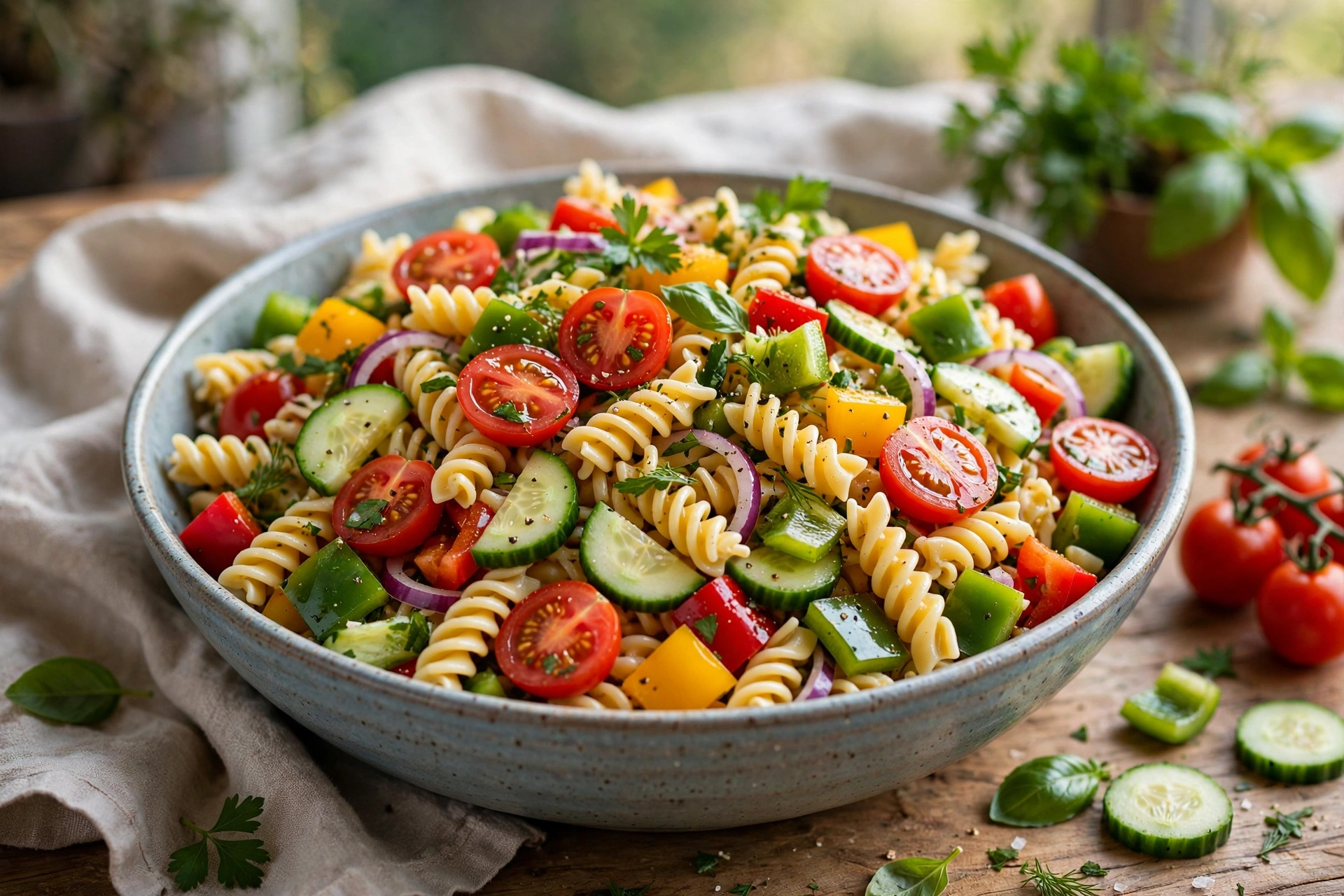
Pasta salad has a reputation problem, and most of it is deserved. Too many versions sit in deli cases looking tired: overcooked pasta drowning in thick, gloopy dressing, with a few pale vegetables scattered in as an afterthought. But a good pasta salad — a genuinely good one — is a completely different dish. It is bright, crisp, and fresh, with pasta cooked just right, vegetables that still crunch, and a light lemon-herb dressing that ties everything together without smothering it. It is the lunch you actually look forward to eating.
This garden veggie pasta salad is my answer to the deli-case disappointment. It loads up on the best of the vegetable drawer: sweet cherry tomatoes, crisp cucumber, crunchy bell peppers, shredded carrots, and red onion for bite, plus a shower of fresh herbs. The dressing is a simple vinaigrette with lemon, garlic, and Dijon, which keeps everything tasting fresh even after a day in the fridge. And because it is served cold or at room temperature, it is one of the few lunches that genuinely gets better when you make it ahead.
I make this most often in late spring and summer, when vegetables are at their best and the idea of a cold lunch sounds like a relief rather than a compromise. But it works year-round, because the vegetables here are available in any season, and the dressing is bright enough to wake up even a winter grocery haul. It is a picnic staple, a potluck hero, and a weekday lunch that never feels like a chore.
Why You’ll Love This Recipe
First, it is a true make-ahead lunch. Pasta salad needs time for the flavors to meld, so making it the night before is not just convenient — it is actually better. Pack it in the morning, and lunch is already done before your day even starts.
Second, it is endlessly adaptable. The recipe below is my favorite combination, but the structure welcomes whatever vegetables you have. Broccoli, zucchini, peas, corn, green beans — if it is crisp and colorful, it belongs here. It is one of the best fridge-clearing recipes I know.
Third, it travels beautifully. No reheating, no wilting, no leaking containers. It holds up in a lunchbox, a picnic basket, or a potluck table for hours without any loss of quality. In fact, it prefers room temperature to ice-cold, which makes it one of the easiest foods to serve a crowd.
And finally, it is light without being unsatisfying. The pasta gives it substance, the vegetables give it crunch and freshness, and the dressing gives it flavor — so you finish lunch feeling energized rather than weighed down. It is the rare cold lunch that actually satisfies.
Ingredients
- 12 ounces short pasta (rotini, fusilli, or farfalle)
- 1 tablespoon salt, for the pasta water
- 1 pint cherry tomatoes, halved
- 1 large cucumber, seeded and diced
- 1 red bell pepper, diced
- 1 yellow bell pepper, diced
- 2 medium carrots, shredded
- 1/2 small red onion, thinly sliced
- 1 cup broccoli florets, cut small and blanched
- 1/2 cup pitted Kalamata olives, halved
- 1/2 cup crumbled feta cheese
- 1/4 cup fresh basil leaves, torn
- 2 tablespoons fresh parsley, chopped
- 1/3 cup extra-virgin olive oil
- 3 tablespoons fresh lemon juice
- 1 tablespoon red wine vinegar
- 1 tablespoon Dijon mustard
- 1 garlic clove, finely minced
- 1 teaspoon honey
- Salt and freshly ground black pepper, to taste
Method
- Cook the pasta. Bring a large pot of water to a rolling boil and add the tablespoon of salt — the water should taste like the sea. Add the pasta and cook according to the package directions until just past al dente, about 1 minute longer than the package says. Pasta for salad should be slightly softer than pasta for a hot dish, because it firms up as it cools. Drain the pasta, but do not rinse it — the light starch on the surface helps the dressing cling.
- Cool the pasta. Spread the drained pasta on a rimmed baking sheet in a single layer and drizzle with a tablespoon of olive oil. Toss lightly and let it cool for about 15 minutes. Cooling it flat, rather than in a pile in a colander, keeps it from clumping into a solid mass. Stir it once or twice while it cools.
- Blanch the broccoli. While the pasta cools, bring a small pot of water to a boil. Add the broccoli florets and cook for exactly 1 minute, then drain and plunge them into a bowl of ice water. This quick blanch keeps the broccoli bright green and just tender while preserving its crunch. Drain well and pat dry — wet broccoli waters down the dressing.
- Make the dressing. In a small bowl or jar, whisk together the olive oil, lemon juice, red wine vinegar, Dijon mustard, minced garlic, and honey. Season generously with salt and pepper. Taste it — it should be bright, tangy, and well-seasoned, because it will mellow once tossed with a pound of pasta and vegetables. If it tastes flat, add more lemon; if it is too sharp, add a drizzle more oil.
- Combine the vegetables. In a very large bowl, combine the cherry tomatoes, cucumber, bell peppers, shredded carrots, red onion, blanched broccoli, and olives. Toss gently so the colors mix. The bowl should look like a garden before the pasta even goes in — that color is part of the appeal.
- Add the pasta and dress. Add the cooled pasta to the vegetables. Pour about three-quarters of the dressing over the top and toss thoroughly, making sure every piece of pasta gets coated. Let the salad sit for 10 minutes, then taste and add the remaining dressing if it seems dry. Pasta absorbs dressing as it sits, so dressing in two stages prevents both a dry salad and a soggy one.
- Add the finishing touches. Gently fold in the crumbled feta, torn basil, and chopped parsley. Fold, do not stir vigorously — feta crumbles into dust if you are rough with it, and you want visible white crumbles against the colors. Season once more with salt and pepper, tasting as you go.
- Chill or rest. Cover the bowl and refrigerate for at least 1 hour, or up to overnight. If you are serving it the same day, let it sit at room temperature for 20 minutes before serving — cold dulls flavor, and this salad tastes best just slightly cool, not fridge-cold.
- Serve. Give the salad a final toss before serving, and check the seasoning one more time — cold food needs a little more salt than hot food, so do not be shy. Serve as a main lunch, or as a side with grilled chicken, sandwiches, or burgers.
Tips and Variations
The single biggest mistake in pasta salad is overcooking the pasta, followed closely by under-seasoning the dressing. Cook the pasta just past al dente, and season the dressing until it tastes almost too bold on its own. Both of these correct themselves once everything is mixed and chilled, and both are much harder to fix after the fact.
Salt your pasta water generously. This is the only chance to season the pasta itself, and unsalted pasta makes a bland salad no matter how good the dressing is. A tablespoon of salt in a large pot is the minimum — do not be timid here.
For a heartier version, add a can of drained chickpeas, a cup of diced mozzarella, or some shredded rotisserie chicken. Any of these turns the salad from a light lunch into a full meal without changing the character of the dish. For a Mediterranean twist, add sun-dried tomatoes, artichoke hearts, and a pinch of oregano.
If you are making this for a crowd, double the recipe without hesitation — it scales perfectly, and it is always the first bowl to empty at a potluck. Just make sure your bowl is big enough; a pound of pasta plus all those vegetables takes up more room than you expect.
For a dairy-free version, simply leave out the feta. The salad is still bright and satisfying, thanks to the olives and the lemon dressing. You can add a handful of toasted pine nuts or sunflower seeds for the savory richness the feta would have provided.
Leftovers keep beautifully in the fridge for up to four days in a sealed container. The vegetables soften slightly over time, but the flavor only deepens. If the salad seems dry after a day or two, revive it with a drizzle of olive oil and a squeeze of lemon rather than more dressing.
Frequently Asked Questions
Should I rinse the pasta after cooking?
No. Rinsing washes away the surface starch that helps the dressing cling to the pasta. Instead, drain it well, toss it with a little oil, and cool it spread out on a baking sheet. This prevents clumping without sacrificing the starch that makes the dressing stick.
Can I make this the night before?
Absolutely — it is better the next day. The flavors meld overnight, and the pasta absorbs just enough dressing to taste seasoned all the way through. If you make it ahead, hold back a little dressing and toss it in just before serving to freshen it up, and add the fresh herbs at the last minute so they stay bright.
What pasta shape works best?
Short, twisty shapes with nooks and crannies: rotini, fusilli, and farfalle are all excellent because they trap dressing and little bits of vegetable. Smooth shapes like penne work too, but ridged or twisted pasta holds onto more flavor. Avoid long pasta like spaghetti, which is awkward to eat cold in a salad.
How do I keep the vegetables crunchy?
Two things: cut them fresh, and do not overdress too early. Add the dressing when the pasta is cool, not hot — hot pasta wilts vegetables on contact. And if you are making the salad more than a day ahead, hold the cucumber aside and add it just before serving, since it softens fastest.
Is this salad good for a picnic?
It is one of the best picnic foods there is. It does not need reheating, it does not wilt, and it is safe at room temperature for a couple of hours. Pack it in a sealed container, keep it in the shade, and bring a serving spoon. It is also a wonderful potluck contribution because it serves a crowd and travels without drama.
That is garden veggie pasta salad done right: pasta with bite, vegetables with crunch, and a dressing that tastes like sunshine. It takes about thirty minutes, it feeds a crowd, and it makes tomorrow’s lunch something to look forward to. Make a big bowl this week — your future self, opening the fridge at lunchtime, will be very grateful.